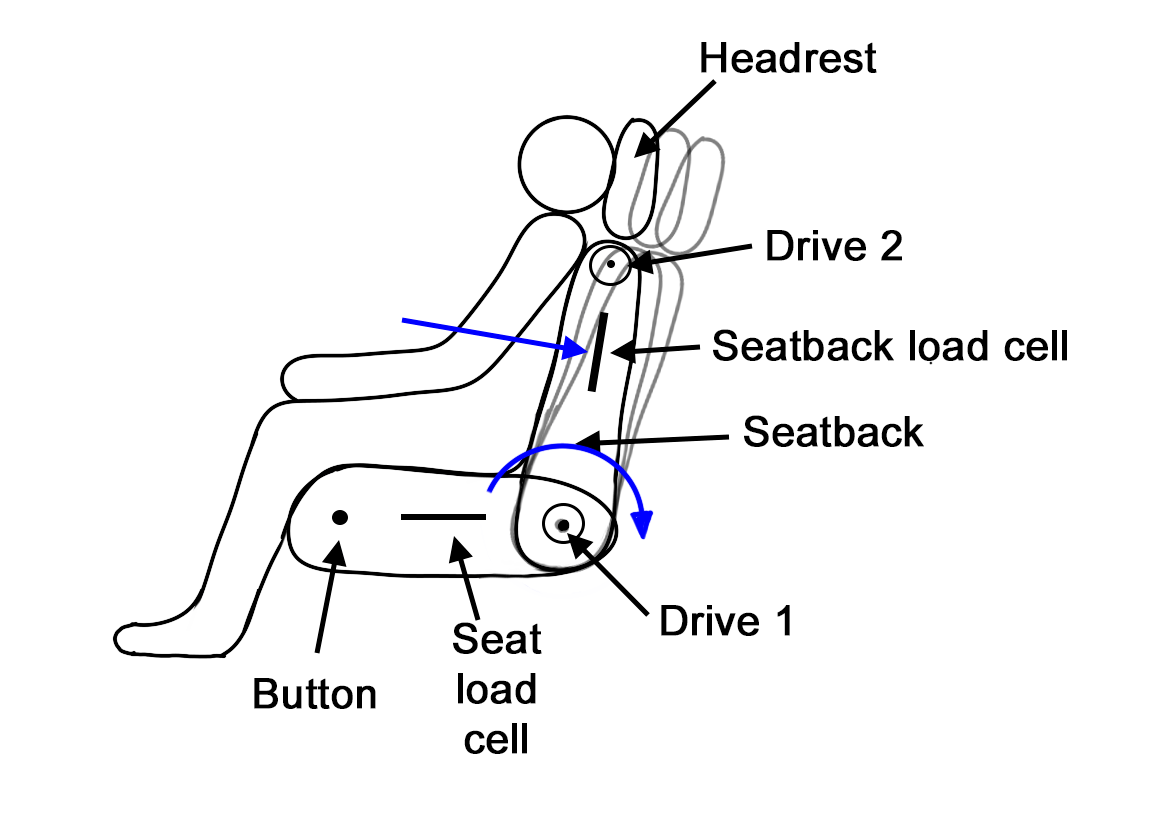
Introduction:
This concept can be used for cost reduction and quality improvement as well, without increasing the complexity of seat vehicle controls.
This solution is to reduce the amount of seat controls. The first step is to change 2 buttons for inclination to only one. The second step if for high grade models using the same button to regulate headrest for high-end vehicles, this allows to use the same seat parts for mid and high grade versions.
Components:
Load cell in the seatback, and other in the headrest.
One button per seat.
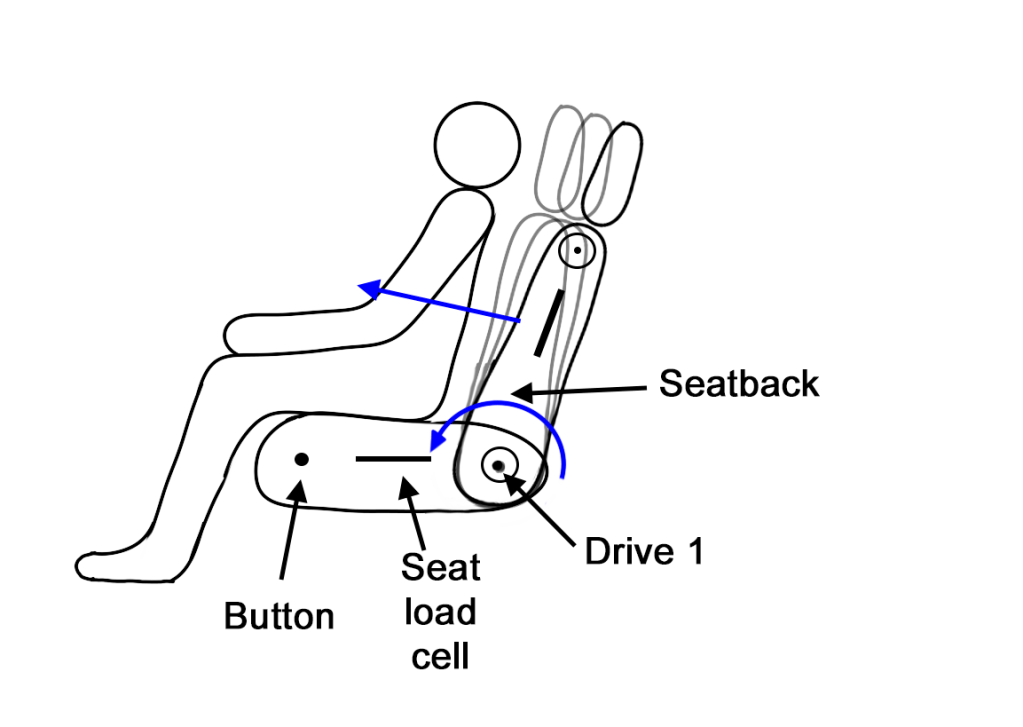
Standard seat regulation drive (Drive 1).
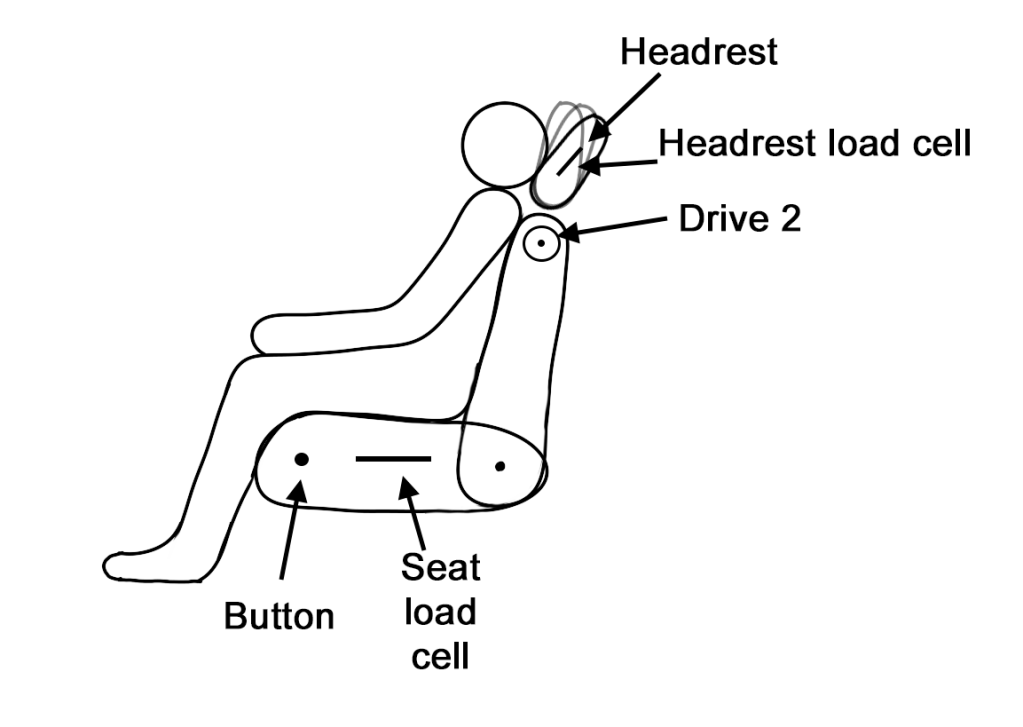
Additional Headrest drive (Drive 2) for high grade versions.
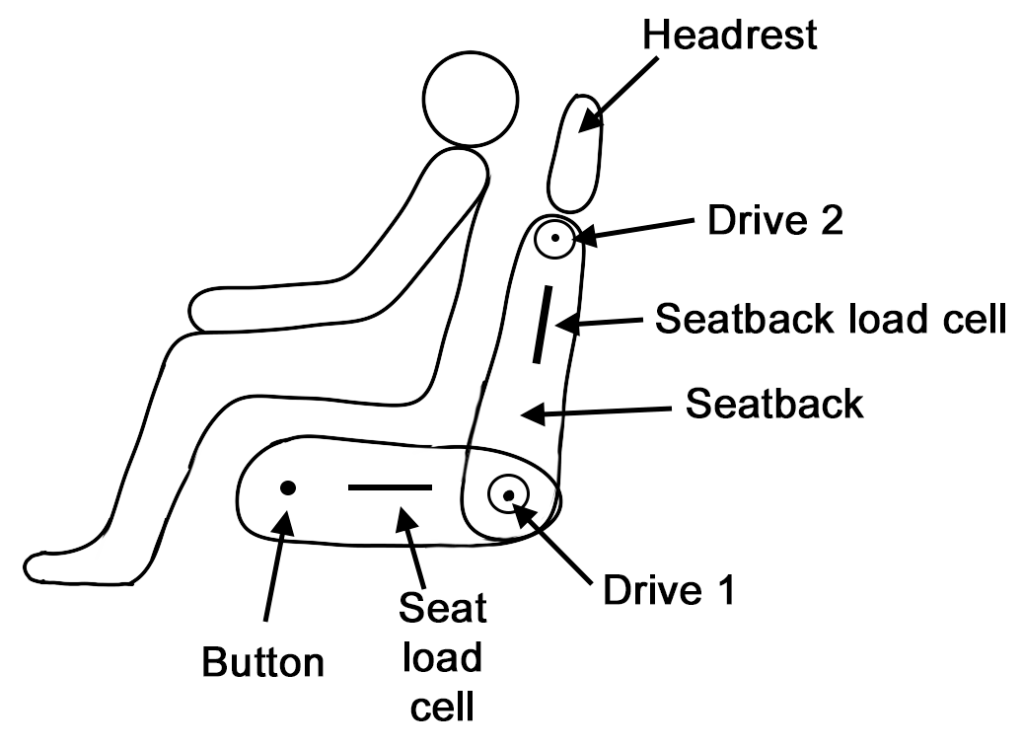
How it works:
If you don’t push the button, nothing happens.
If you push the button in normal position, applying normal force with your back on the seatback, the seatback shouldn’t move.
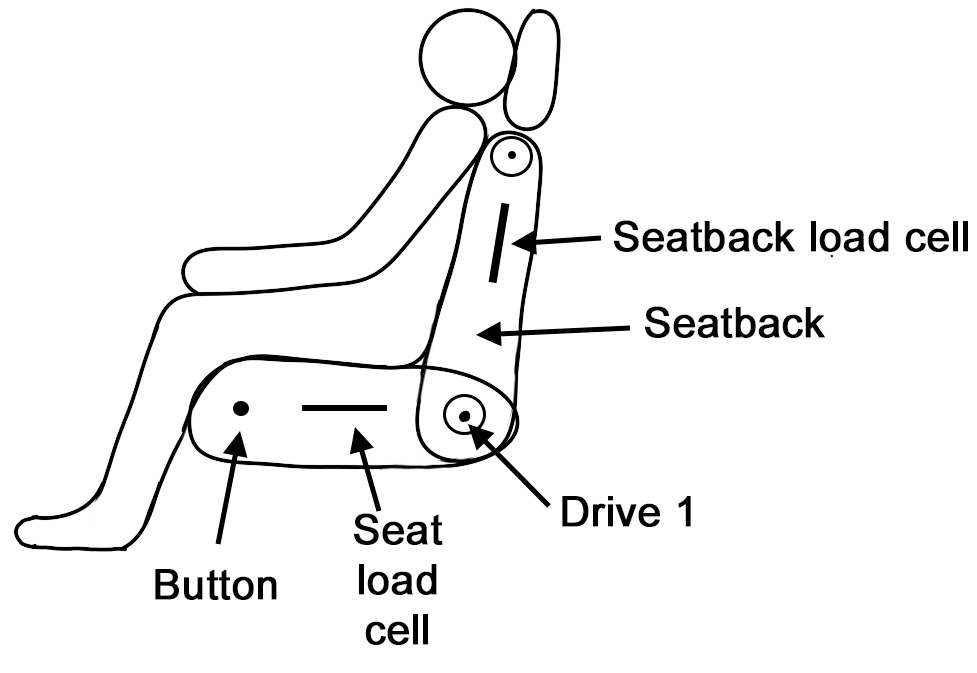
If you push the button while you are slightly making force with your back to the seatback. The electric drive will turn the seatback to rear direction until you release the bottom or stopping making force.
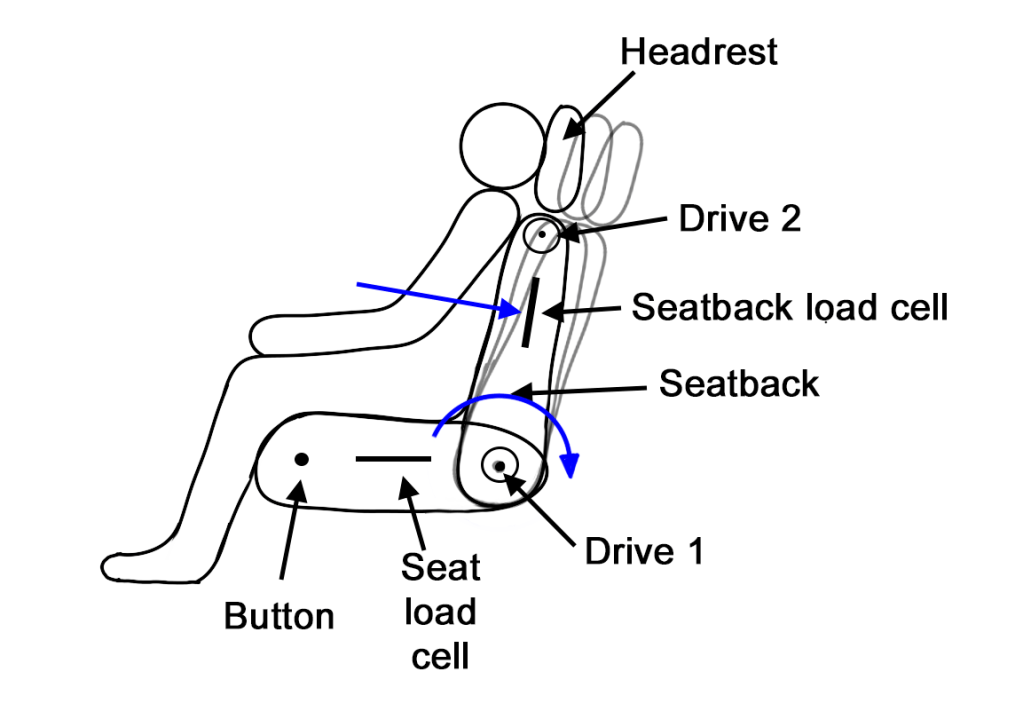
If you push the button while you aren’t making force on, the seatback will turn to the front direction until you release the button or made contact with your back.
Headrest:
For the headrest, it is necessary to add one drive for the regulation (Drive 2). This means that only high grade versions will have it. The advantage is that we can use the same button for both regulations.
Same logic for headrest, making force with the head will allow moving it backward and releasing the headrest for forward regulation.
 Diario de un loco